
Two Brands, One Roof
How Dual-Brand Conversions Are Transforming Hospitality.
Canada’s hospitality landscape is evolving quickly. For hotel owners navigating rising costs, shifting guest expectations, and increased competition, one strategy is standing out: converting existing properties into dual-branded hotels that incorporate extended-stay accommodations.
The Strategic Shift: From Single Use to Dual Demand
Traditional hotel models rely heavily on short-term stays—overnight business travelers, weekend tourists, and seasonal demand. While still essential, this segment alone can leave properties vulnerable to market fluctuations.
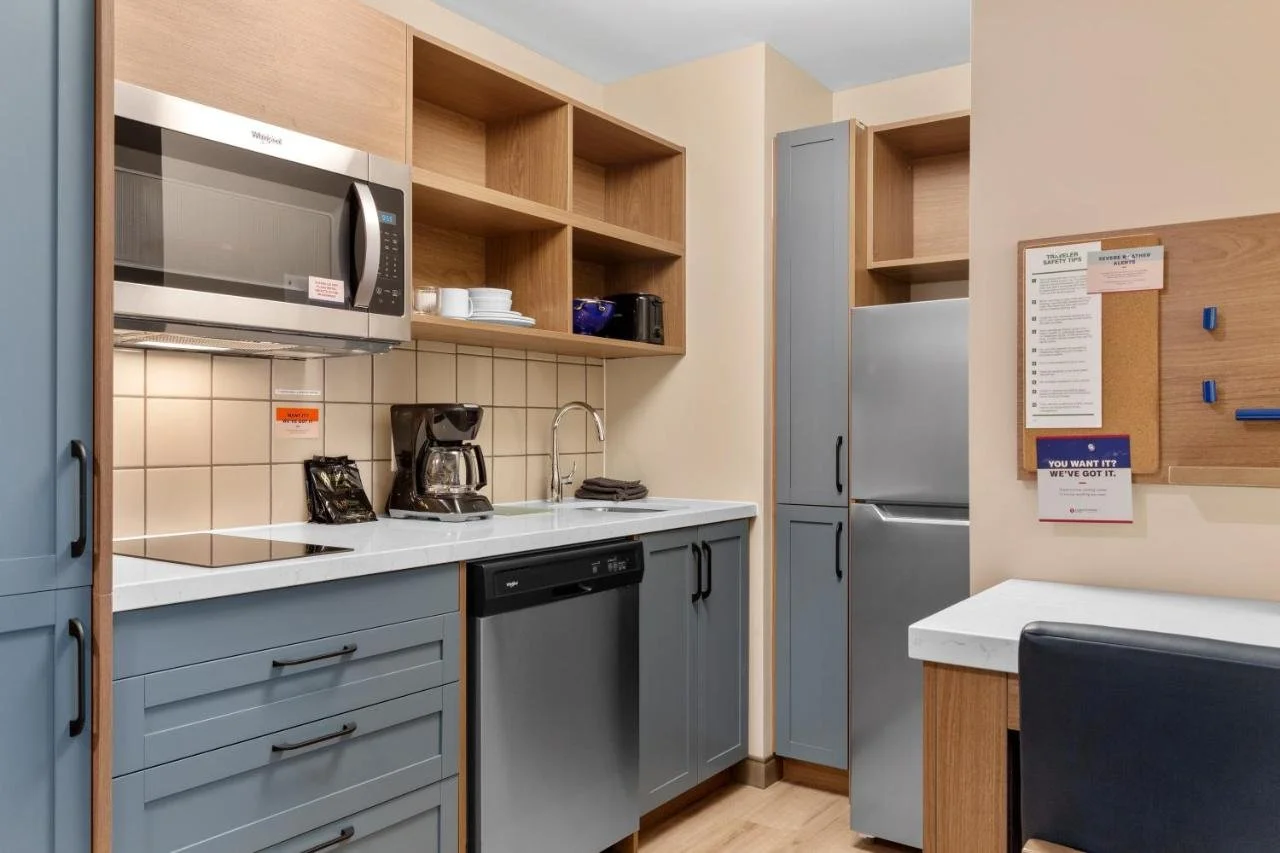
By integrating an extended-stay component—featuring suite-style rooms with kitchens, living space, and long-term amenities—owners can effectively transform one asset into two complementary revenue streams:
Transient guests (daily stays, higher turnover)
Long-term guests (weekly/monthly stays, stable occupancy)
This dual-brand approach allows properties to serve a broader market without requiring entirely new builds.
Why Extended-Stay Is Thriving in Canada
Several macro trends are driving sustained demand for long-term accommodations:
Workforce mobility: Project-based professionals, healthcare workers, and consultants require housing for weeks or months
Housing shortages: In many Canadian cities, temporary housing gaps are being filled by extended-stay hotels
Relocation and insurance stays: Families in transition need flexible, home-like accommodations
Blended travel: Guests combining business and leisure are staying longer than ever
Extended-stay properties consistently outperform in occupancy stability, often maintaining strong performance even when traditional hotel demand softens.
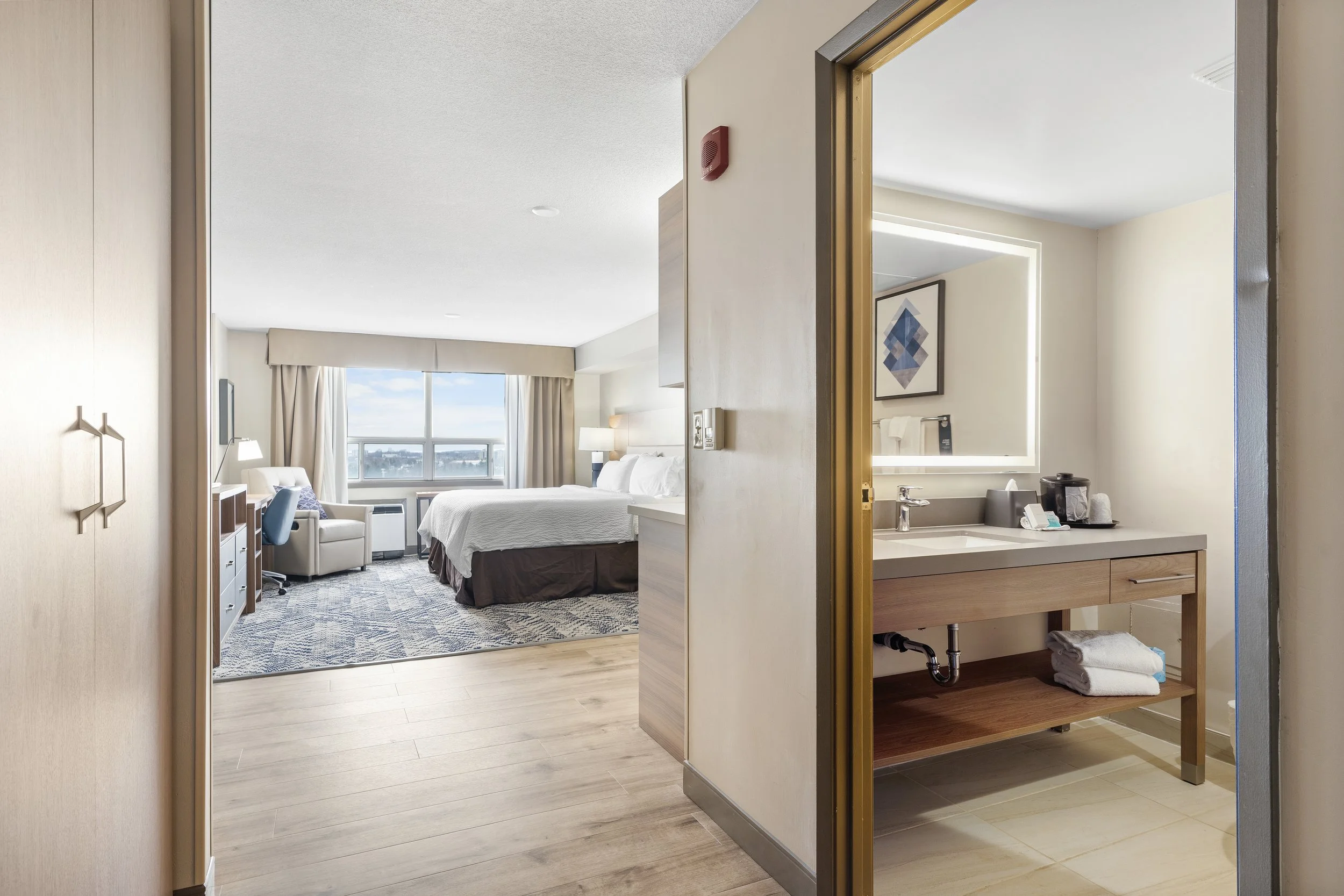
Long Term Studio Suite: Candlewood Suites, London, ON.
The Business Case for Conversion
1. Higher Occupancy Stability
Extended-stay guests typically book longer stays, reducing room turnover and smoothing occupancy volatility. This creates a reliable base business that supports overall property performance year-round.
2. Increased Revenue Per Available Room (RevPAR)
While nightly rates may differ, extended-stay guests generate value through:
Lower distribution costs (fewer bookings to manage)
Reduced housekeeping frequency
Longer average length of stay
When combined with short-term inventory, this often leads to stronger blended RevPAR and improved profitability.
3. Operational Efficiency Through Shared Infrastructure
Dual-branded hotels are designed for efficiency:
One front desk serving multiple guest types
Shared back-of-house operations
Consolidated amenities like gyms, lounges, and meeting spaces
For existing hotels, this means maximizing current infrastructure rather than duplicating it—an ideal scenario for renovation-focused upgrades.
4. Stronger Investment and Financing Appeal
Lenders and investors increasingly favor assets with diversified income streams. Dual-branded properties with extended-stay components are viewed as:
Lower risk due to demand diversification
More resilient during economic downturns
Better positioned for long-term growth
For owners considering refinancing or exit strategies, this can translate into higher asset valuations.
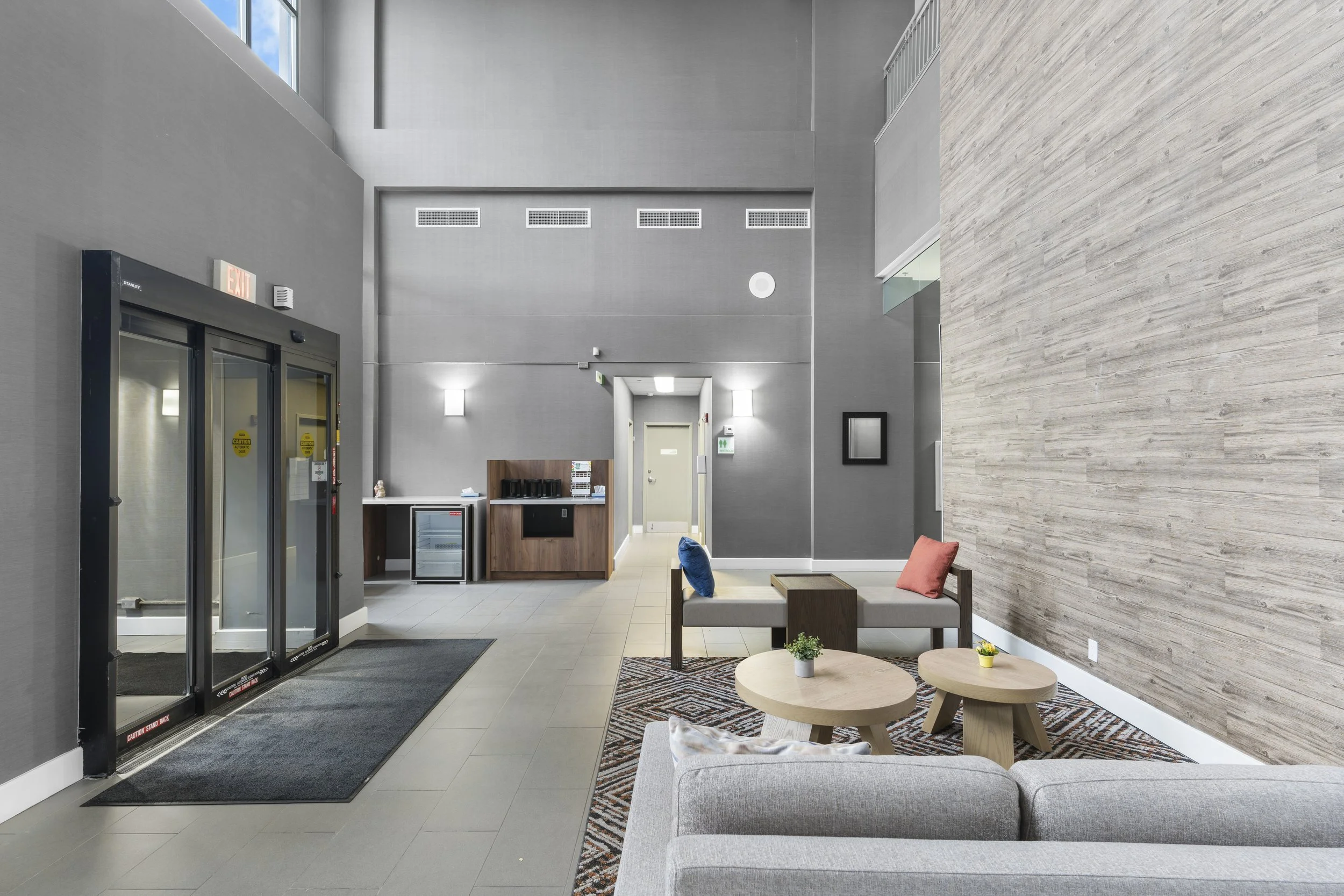
Secondary Entrance Lobby: London, ON.
Design Considerations That Drive Success
Successfully converting to a dual-brand extended-stay model requires more than adding kitchens—it demands intentional, experience-driven design.
Key considerations include:
Space Planning
Balancing unit mix between short-term rooms and extended-stay suites while maintaining operational flow.
Guest Experience Segmentation
Designing spaces that cater to both:
Short-term convenience (quick check-in, business amenities)
Long-term comfort (storage, workspaces, residential feel)
Back-of-House Optimization
Ensuring staff can efficiently support two guest types without increasing operational complexity.
Brand Integration
Creating a cohesive property that still allows each brand identity to stand on its own.
The Role of Design-Build in Maximizing ROI
A successful dual-brand conversion hinges on execution. Design-build firms specializing in hospitality renovations bring:
Integrated planning and construction, reducing timelines and costs
Brand compliance expertise, ensuring standards are met efficiently
Phased renovation strategies, allowing properties to remain operational during upgrades
Cost certainty, critical in today’s volatile construction environment
Most importantly, they understand how to translate business strategy into built form—ensuring every design decision support revenue growth and operational efficiency.
Relevant Projects: Candlewood Suites, London, ON, Holiday Inn, London, ON